Last Updated on September 8, 2026
There’s a version of you that exists only in airport arrival halls.
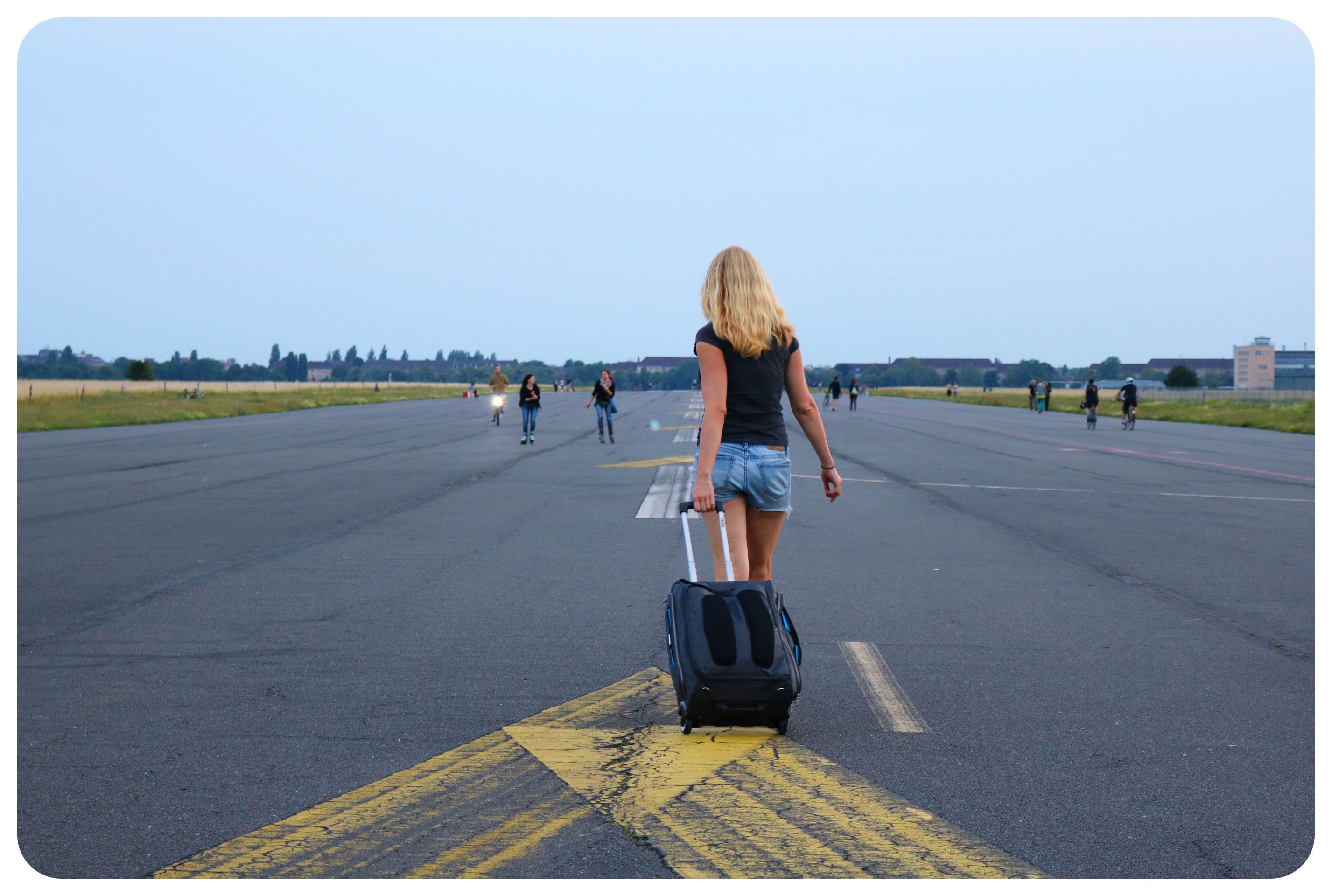
She’s been awake for twenty-two hours. She’s carrying everything she owns on one shoulder. She’s squinting at signs in an alphabet she started learning on the plane, while four different men ask where she’s going, and her phone hunts for a network that isn’t there yet.
Every traveler knows her. And every experienced traveler eventually learns the same lesson: the first hour in a new country is the most vulnerable hour of the entire trip — and the easiest one to fix in advance.
After years of landings that ranged from seamless to genuinely chaotic, we’ve distilled arrival day into a playbook. It’s not glamorous. But it’s the difference between starting your trip at the hotel check-in desk and starting it in a parking lot argument about a meter that “doesn’t work today.”
Why the First Hour Goes Wrong
Arrival halls are engineered pressure points. Think about what collides there:
- You, at your worst. Jet-lagged, dehydrated, cognitively fried. Studies on sleep deprivation put your decision-making somewhere around “mildly drunk” — and that’s exactly when you’re asked to make quick choices involving money, in a currency you can’t intuitively value yet.
- Everyone who knows it. The unofficial “taxi” guys inside the hall. The helpful stranger steering you toward his cousin’s car. The rank where the meter mysteriously becomes a matter of negotiation after midnight.
- Zero local context. You don’t yet know what a fair fare is, which neighborhoods are on the way, or whether the road into town takes twenty minutes or ninety.
None of this means the world is out to get you — most drivers everywhere are honest. It means the system is stacked against your judgment precisely when your judgment is weakest. The playbook exists to move every decision out of that hour.

Before You Fly: The Twenty-Minute Prep
Learn your arrival math
One search the week before changes everything: how far is the airport from where I’m staying, and what are the real options?
The answers vary wildly, and they’re often surprising. Some “city” airports are 90 kilometers from the city whose name they carry. Some capitals have two airports at opposite ends of town. Some destinations have a brilliant train that beats any car — and some have no public transport at all, where every single traveler leaves by road whether they planned to or not.
Ten minutes of reading tells you which world you’re landing in. Write the answer down somewhere that doesn’t need Wi-Fi.
Decide the ride before you’re tired
Here’s the honest decision framework we wish someone had handed us years ago:
Public transport wins when the connection is genuinely good — a fast train to the center, you’re traveling light, arriving in daylight, and your accommodation is near a station. Lisbon’s metro, Madrid’s cercanías, Manchester’s airport trains: take them, save the money, feel smug.
Ride-hailing apps win when they’re legal and established at that airport, pickup zones are clearly marked, and you’ll have data the moment you land. That last condition fails more often than people expect.
Prebooked transfers win when any of these are true: you land late at night, when trains stop and ranks thin out; you’re a group or a family with a luggage mountain; the run is long and a metered fare is a lottery; or you simply don’t want your first conversation in a new language to be a price negotiation. Booking transfers in advance means the fare was fixed before you flew, someone is tracking your flight if it’s delayed, and a name sign is waiting instead of a queue — which, at 1 a.m. in an unfamiliar country, is worth more than the price difference.
There’s no universally right answer. There’s only the right answer for this landing — and the point is to choose it at your kitchen table, not at the rank.
Sort your connection and your paper
Two boring items that prevent ninety percent of arrival chaos:
- Connectivity before departure. Whether it’s an international plan or a digital SIM installed at home, make sure your phone works the moment the wheels touch down — maps, bookings, and your driver’s contact all live there.
- The offline folder. Screenshot your accommodation address (in the local script too), your booking confirmations, and the route from the airport. Batteries die; Wi-Fi lies; screenshots don’t.
In the Hall: The Five Rules
However you’re getting into town, the same five rules apply everywhere from Bangkok to Bogotá:
1. Never say yes inside the building
Anyone offering a ride inside the arrivals hall is, at best, the expensive option. Official ranks, licensed counters, and prebooked drivers are outside or clearly signposted. The walk of thirty extra meters is the cheapest insurance in travel.
2. Know your one number
Before you land, know either the official rank fare to your area, the flat airport rate if one exists, or your prebooked total. One anchor number turns every conversation from negotiation into confirmation.
3. Cash small, cards ready
A little local cash in small notes solves the “no change” routine before it starts. And check whether your destination is one where cards and apps rule — in plenty of cities, the airport ATM queue is the only queue you can skip entirely.
4. Verify before you ride
Rideshare? Match the plate before the door opens. Prebooked? The name sign should show your name, and you should have the driver’s details from the confirmation. Rank taxi? Meter on, or price agreed out loud before the luggage goes in the trunk — never after.
5. Share the ride, not just the plan
Someone at home should already have your itinerary. Once you’re moving, sharing live location for the airport run takes one tap and costs nothing. It’s not paranoia; it’s the arrival-day equivalent of a seatbelt.

The Late-Night Landing: A Special Case
If there’s one scenario where we’ve stopped improvising entirely, it’s the post-midnight arrival.
The math changes after dark. Trains and buses stop or thin out. The rank has three cars and forty passengers from your flight. Night tariffs kick in — in some cities the meter legally jumps 20% or more on nights and weekends. And every safety margin you rely on in daylight (busy halls, open information desks, plan B options) is closed.
Late arrivals are exactly when the prebook-versus-improvise question stops being about money and becomes about not standing alone in a quiet terminal solving logistics at 2 a.m. Decide that one before you fly. Always.
Landing Like a Local: The Checklist
The whole playbook fits on a boarding pass:
- Arrival math researched: distance, time, real options.
- Ride decided and, if it’s a late/group/long-run landing, booked.
- Phone connection sorted before departure.
- Offline folder: address, confirmations, route.
- One anchor number memorized (fare or total).
- Small cash, cards, plate-or-name verification.
- Live location shared for the ride in.
Seven lines. Twenty minutes of prep. And the jet-lagged version of you in the arrivals hall — the one squinting at unfamiliar signs with everything she owns on one shoulder — gets to walk past the whole circus, straight to the part where the trip actually begins.
Because the best travel stories start on day one. Not in hour one.