Last Updated on August 31, 2026
On paper, a quick one-hour flight from London to Scotland looks like an obvious winner over a four-hour rail journey. Yet experienced travelers know that flight duration on a ticket is only a fraction of the actual journey.
When you factor in airport transit, security lines, early arrivals, and travel from the terminal into the city center, flying often loses its time advantage. Let’s examine how the door-to-door numbers actually stack up when you compare rail against air travel across Britain.
How Door-to-Door Travel Time Really Compares
Take the London to Edinburgh route as a prime example. An airline ticket might list the flight time at one hour and twenty minutes. However, getting to Heathrow or Stansted from central London takes around 45 minutes to an hour. Airlines recommend arriving at least 90 minutes before departure for domestic flights, and security queues at busy London airports can easily add more. After landing at Edinburgh Airport, you face a wait at baggage reclaim and then a 35-minute tram ride into the city center.
In total, flying between London and Edinburgh typically takes between four and four and a half hours from city center to city center, depending on which London airport you use and how smoothly security goes. By contrast, according to Split My Fare’s Edinburgh to London train guide, an LNER train from London King’s Cross to Edinburgh Waverley takes around four and a half hours, with the fastest services doing it in just over four hours. You walk straight onto the platform in central London and step off directly into the heart of Edinburgh with zero check-in queues or luggage limits.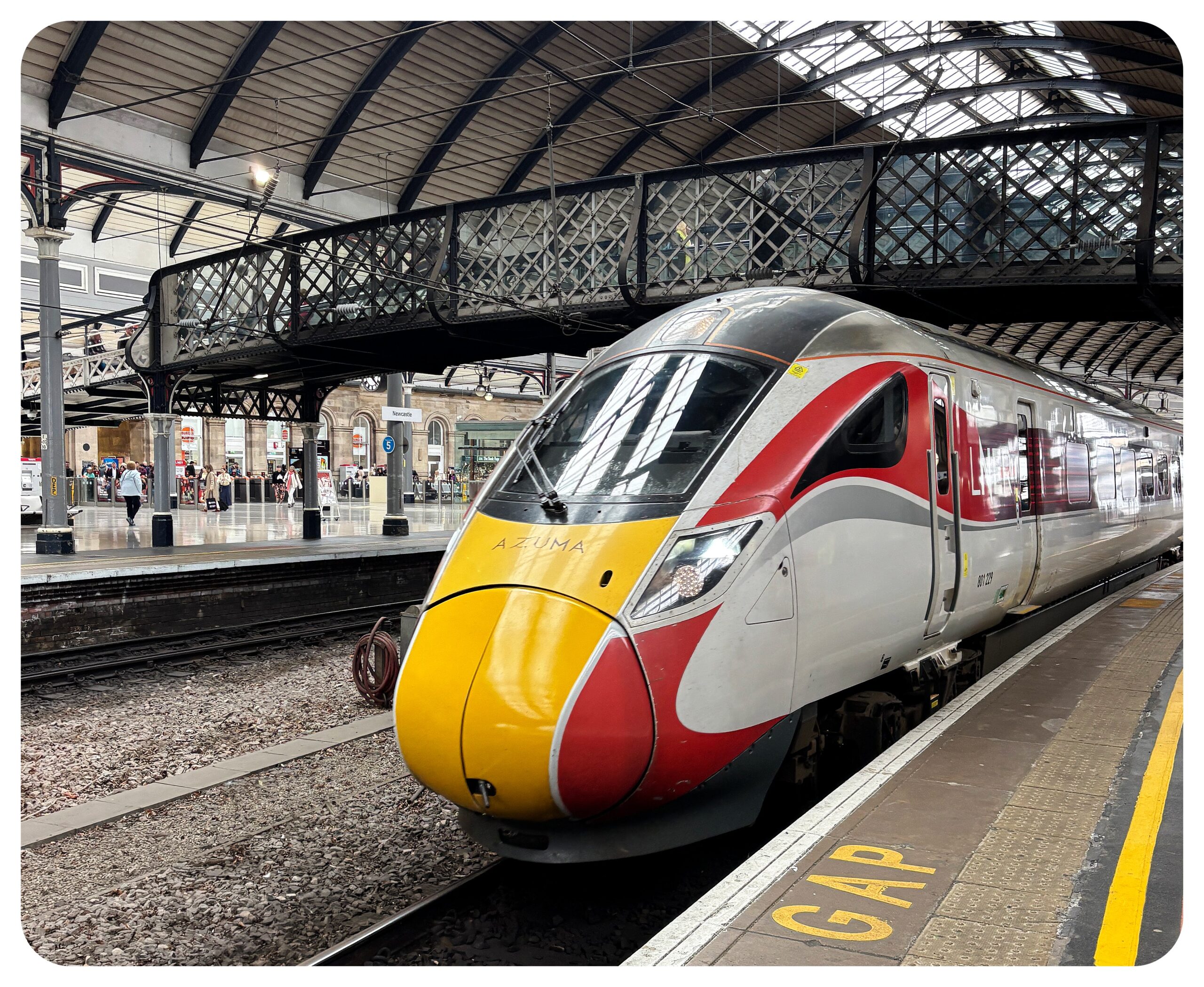
The dynamic is even clearer on shorter domestic routes like London to Manchester. A flight between Manchester and London takes under an hour in the air, but total travel time easily exceeds four hours once airport logistics are included. An Avanti West Coast train completes the city-center to city-center run in just over two hours, making flying on this route entirely impractical for time-conscious travelers.
Real Costs and Onboard Comfort on British Tracks
Ticket prices for domestic flights can appear lower at first glance, especially with budget airlines. However, secondary fees quickly accumulate. Budget airfares rarely include checked bags, seat selection, or airport express transfers. When you add £30 to £50 for airport express trains at both ends, domestic air travel loses its budget appeal.
Rail pricing can also vary, but advance booking and split ticketing make high-speed train travel far more affordable. Travelers who break their journey into separate ticket segments along the East Coast Main Line can secure substantial savings over standard fares. Rail passengers also avoid surprise baggage charges and expensive airport transit passes.
Comfort is another major factor where trains excel. Flying splits your morning into fractured, high-stress blocks: waiting in security queues, sitting at crowded gates, boarding, and waiting for luggage. On a train, you get four continuous hours of spacious seating, free Wi-Fi, power sockets, and freedom to walk around. You can work uninterrupted or simply watch the countryside pass by.
The Environmental Impact of UK Journeys
Beyond time and comfort, the environmental argument for train travel in Britain is overwhelming. Short-haul domestic flights are among the most carbon-intensive forms of transport per passenger kilometer.
Recent rail industry calculations show that taking an electric train from London to Edinburgh produces roughly 12.5 kilograms of carbon emissions per passenger. The equivalent flight generates over 160 kilograms of carbon per passenger, making rail travel more than 12 times cleaner. Choosing the train directly aligns with the slow travel trend, allowing independent travelers to reduce their carbon impact while enjoying a far more scenic and relaxed journey.
How to Pick the Best Option for Your Trip
Short-haul domestic flights still have a place for travelers connecting to international long-haul flights or visiting remote locations far from main railway lines. For city-to-city routes across the UK, however, the train consistently offers a faster, cheaper, and far less stressful experience.
Next time you plan a trip across Britain, look beyond the flight duration listed on a travel search engine. Factor in every leg of the journey, from your hotel door to your final destination, and you will quickly see why rail travel remains the smartest choice.