Last Updated on October 9, 2026
Malta welcomed 4,022,310 inbound tourists in 2025, up 12.9 percent on 2024, according to the National Statistics Office, and most of them saw the same island: the one visible from a coach window. Roads reach Valletta’s gates, Mdina’s walls and a handful of clifftop viewpoints. They do not reach the geology, the fortifications as their builders meant them to be read, or a coastline where entire cliff faces have no path at all.
The island is stacked rock, and only the water shows the layers
Malta’s cliffs hold three rocks in sequence. Hard Upper Coralline Limestone caps the plateau, golden Globigerina Limestone forms the middle band that built Valletta and Mdina, and soft blue-grey clay sits below, slumping wherever rain loosens it. From a boat the layers read like a cross-section: the cap shearing away in blocks, the clay shading bays such as Anchor Bay and Għajn Tuffieħa. The Dingli Cliffs, about 250 meters at their highest, are the island’s high point, yet the road gives you only the rim.
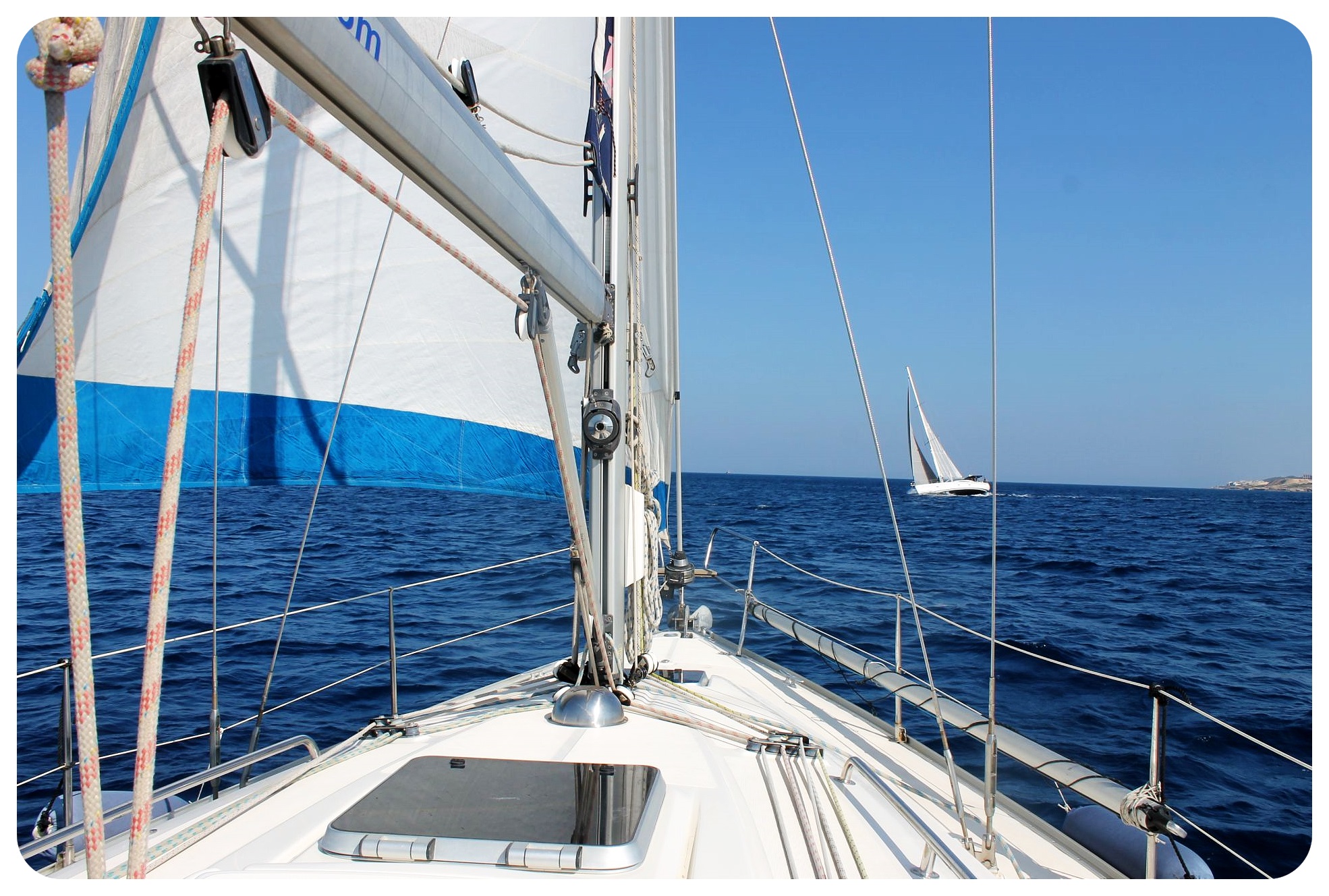
The wind, not the brochure, decides which coast you sail. A north-easterly Gregale usually flattens the south coast, so Blue Grotto boats often run on days when northern bays are rough, while a southerly swell does the reverse. Ask the operator the evening before, not the morning of.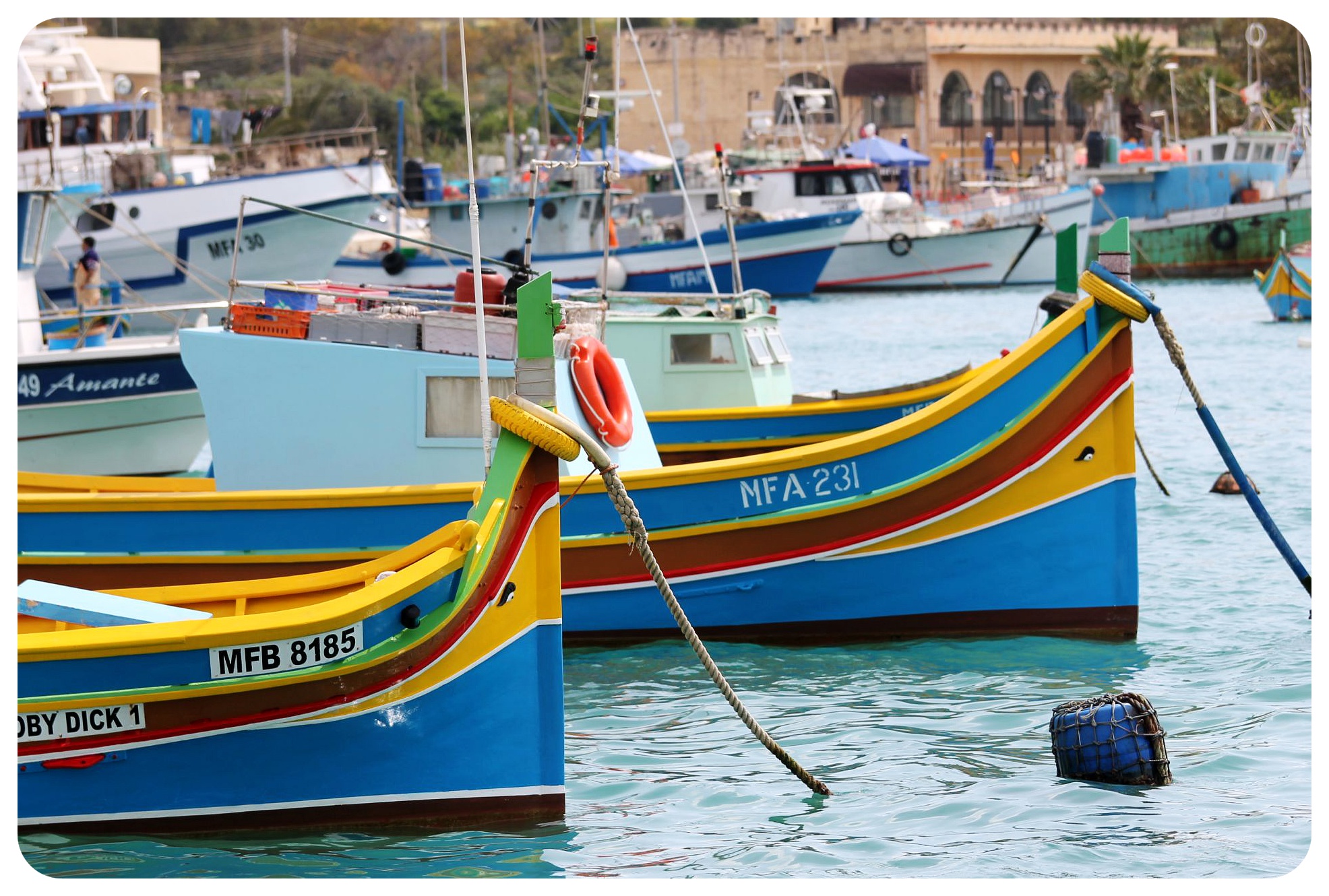
Valletta reads differently from the water
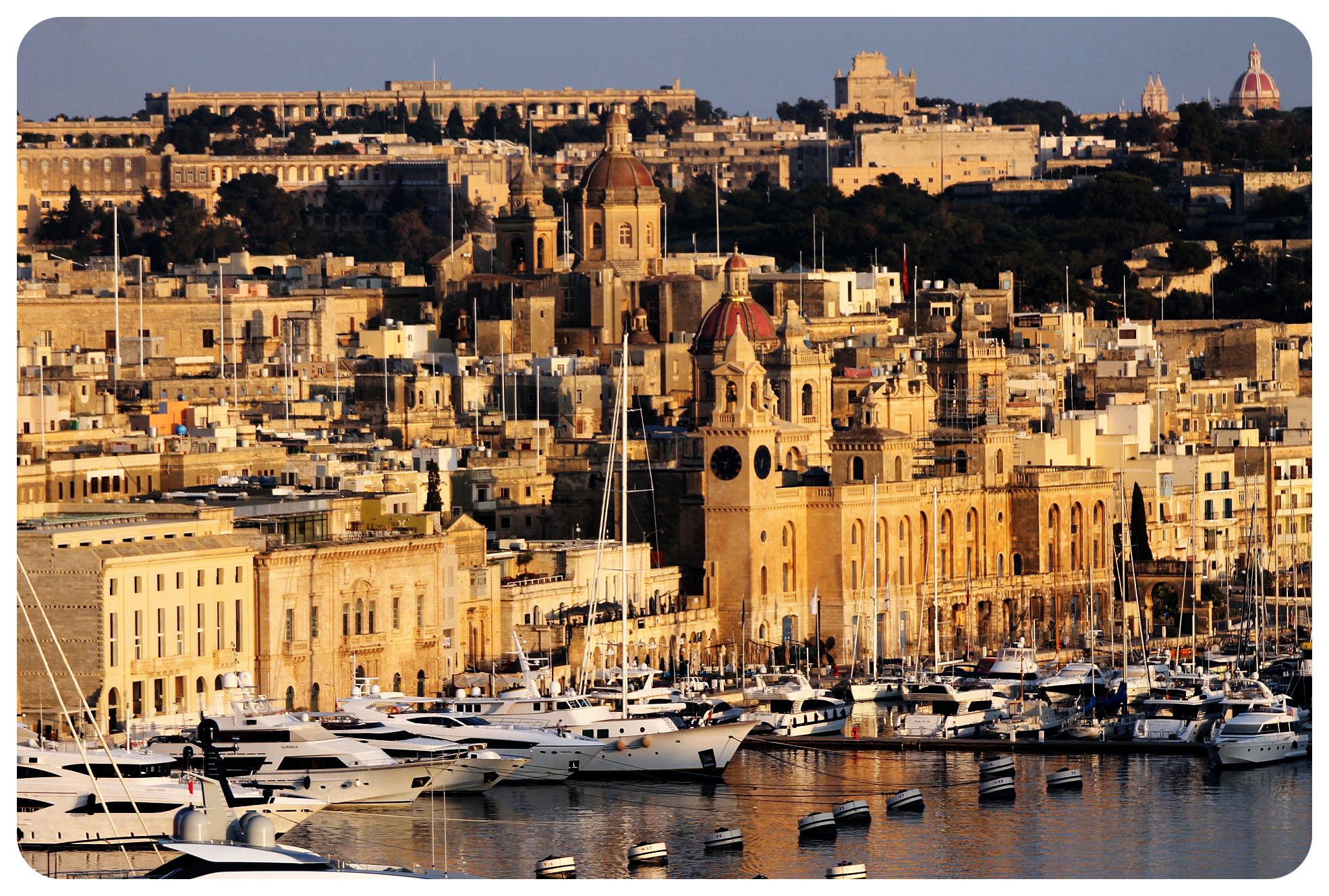
Valletta was laid out from 1566, a year after the Great Siege, on the narrow Sciberras peninsula between Grand Harbour and Marsamxett Harbour. From the water its logic is plain: forts such as St Elmo, St Angelo, Ricasoli and Manoel overlap their lines of fire, and each bastion covers the next. Look for the eye and ear carved into the Gardjola watchtower in Senglea, where sentries once watched and listened for ships. Anyone arranging yacht charters in Malta can ask for a slow pass of the Grand Harbour mouth in the last hour of daylight, when low sun warms the limestone; the working port’s traffic rules apply, so the skipper has the final say. A standard harbor cruise from Sliema or Valletta lasts about 90 minutes and works, in my view, as the best orientation for a first day.
Caves, islets and a coastline that is still changing
Boats to the Blue Grotto leave Wied iż-Żurrieq and take 25 to 30 minutes. The electric blue comes from sunlight bouncing off pale seabed sand, so mornings, when light enters the cave mouths, are better than afternoons. Offshore, Filfla, a protected islet about five kilometers out, cannot be landed on; the navy used it for target practice until 1971, and seabirds now have it to themselves.
On Gozo, Dwejra shows how fast this coast moves. The Azure Window collapsed on 8 March 2017 in a storm. Fungus Rock, nearby, once supplied the Knights with a plant they prized as medicine. My opinion is that the 2017 loss is the strongest argument for seeing the cliffs sooner rather than later.
Comino now runs on time slots
Since 1 May 2025, visitors arriving at Comino’s Blue Lagoon by private or commercial vessel have had to book a free slot online, receive a QR code and wear a wristband. Slots run 8am to 1pm, 1:30pm to 5:30pm and 6pm to 10pm, with 4,000 people allowed at once, down from up to 12,000 in summer 2024. Reporting in June 2026 still counted eight to twelve commercial boats around the lagoon and growing crowds by noon, and activists argue the cap does not address boat traffic. I treat the lagoon as a thirty-minute stop and swim instead at the Crystal Lagoon or Santa Marija Bay, which are used mostly by boaters and so are easier to reach by sea. Check the booking portal before departure, because the rules have shifted each season.
Choosing the right trip for the days you have
Match the boat to the question you want answered. A harbor cruise answers the history question. A Blue Grotto run answers the color question. A full-day catamaran to Comino and Gozo answers the swimming question, with fixed stops. A private charter answers the freedom question, at a higher cost per head for small groups. With the average visitor staying 6.3 nights, giving one day to the water costs roughly a sixth of a stay. September and October offer the best balance: thinner crowds, and water that stays swimmable into November.
The Ċirkewwa to Mġarr ferry crosses in about 25 minutes and remains the better way to reach Gozo; a boat is the better way to see it. Whichever you choose, confirm shade on deck and an onboard toilet, carry a dry bag, and wear shoes that can get wet, since cave landings and jetty steps are slippery.