
Last Updated on January 27, 2026
For many travelers, learning to dive sits permanently on the “one day” list. Too technical. Too expensive. Too far out of your comfort zone. Malta quietly dismantles those assumptions. Entry level diving here isn’t positioned as a high-risk adventure or a bucket-list flex. It’s presented as a controlled, structured experience that fits naturally into a short Mediterranean holiday.
That distinction matters. Malta doesn’t rely on spectacle to sell diving. It relies on conditions, access, and consistency. Those three factors are exactly what first-time divers need, even if they don’t yet know it.
Entry level diving isn’t about depth, danger, or daring
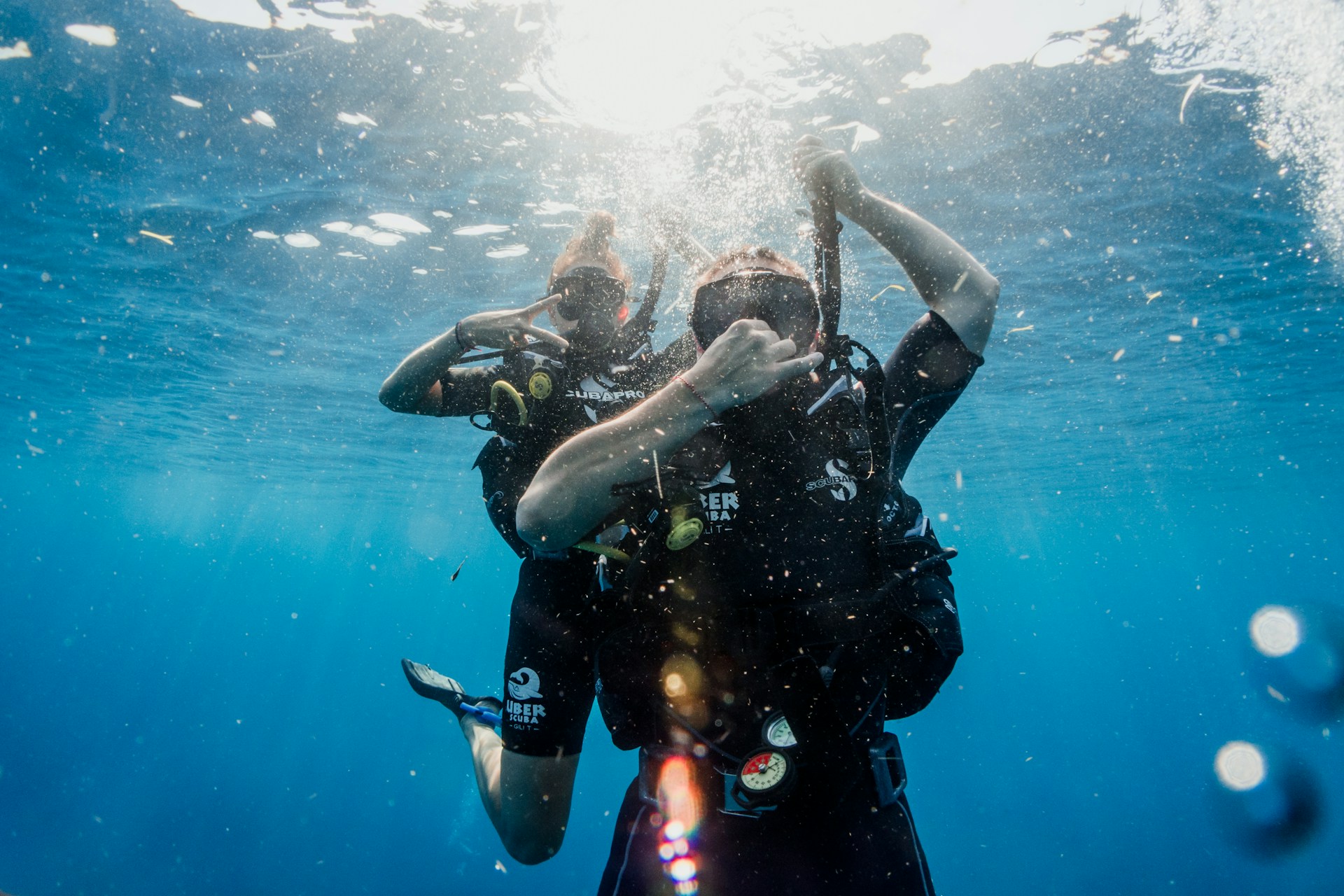
Entry level diving is designed for people who have never worn a regulator, never cleared a mask, and have never breathed underwater. The objective is competence and comfort, not conquest. You are taught a small number of skills in a logical sequence: breathing rhythm, buoyancy awareness, hand signals, equalization. Each skill builds on the last.
What’s often overlooked is cognitive load. New divers are processing unfamiliar sensations, equipment, and spatial awareness all at once. Malta’s approach works because it strips away unnecessary variables. Calm water, stable temperatures, and predictable visibility reduce mental noise. You’re not battling currents or guessing what’s below you. You’re learning.
Malta’s underwater geography does half the teaching for you
Malta’s seabed is limestone, shaped into terraces, slopes, and plateaus rather than sudden drop-offs. For beginners, this matters more than colorful fish. Gradual depth changes allow instructors to control descent pace precisely. Students can stop, reset, and continue without stress.
Visibility regularly exceeds 20 meters. That range gives beginners spatial reference, something murky or plankton-heavy waters remove. You can see where you came from and where you’re going. Orientation builds confidence quickly.
This is why diving in Malta often feels easier than in destinations marketed far more aggressively. The environment does not compete with the lesson. It supports it.
Shore diving changes the psychological equation
Many first-time divers don’t realize how much anxiety comes from boats. Motion sickness, time pressure, and the feeling of being rushed off a deck all amplify nerves. Malta is one of the rare places where shore diving dominates beginner training.
You walk into the sea. You walk out. No ladders. No rolling decks. No deadlines dictated by fuel or schedules. If someone needs an extra minute to breathe, equalize, or adjust equipment, that minute exists.
This flexibility leads to better outcomes. Skills stick because they’re learned without panic. People surface feeling capable rather than relieved it’s over.
Instructors in Malta are educators first, guides second
Malta’s long-standing diving culture prioritizes instruction quality over volume. Many instructors teach year-round, not seasonally, which sharpens judgement. They recognize hesitation before it becomes fear. They slow down before students realize they need it.
Good instructors adapt communication styles. Some students respond to technical explanation. Others need simple reassurance. Malta’s training environment allows that adaptability because dives are not rushed and sites are repeatable.
This isn’t something marketing material highlights, but it’s something experienced divers notice immediately.
Beginners here don’t just see “open water”
Entry level dives in Malta often include shallow wrecks, arches, and reef structures. Not deep, not complex, but visually distinct. These features provide reference points. A wreck hull, for example, gives scale and orientation. You understand depth without staring at a gauge.
This is educational, not theatrical. Seeing structure underwater helps beginners grasp buoyancy, distance, and movement far more effectively than hovering over sand.
Malta lowers non-diving friction in subtle ways
Language matters. Infrastructure matters. Malta removes small stressors that add up. English-speaking instructors. Short transfer times. Familiar medical standards. Clear safety briefings.
When those variables disappear, mental energy can go into the experience itself. Beginners don’t feel like outsiders navigating an unfamiliar system. They feel like participants.
This is one reason entry level diving integrates so easily into broader travel plans. You’re not reorganizing your holiday around it.
Diving fits into the rhythm of a normal holiday day
Most entry level dive experiences run as half-day activities. Morning sessions leave afternoons free. Afternoon sessions allow lazy mornings. There’s no enforced downtime beyond standard surface intervals.
You can dive, eat well, explore towns, swim, or rest without feeling overcommitted. That balance is rare in destinations where diving demands early starts, long boat rides, or rigid schedules.
Cost transparency builds trust early
Entry level diving in Malta is usually all-inclusive. Instruction, equipment, supervision, and insurance are bundled. Beginners aren’t confronted with surprise add-ons or unclear pricing structures.
Compared with tropical destinations where equipment rental, boat fees, and marine park charges stack up, Malta’s model feels refreshingly straightforward. That transparency reduces decision paralysis for first-timers.
Regulation and conservatism are features, not limitations
Malta applies conservative depth limits, strict ratios, and weather-based site selection. For experienced divers, this can feel restrictive. For beginners, it’s exactly what builds trust.
Sessions are cancelled or relocated if conditions shift. That predictability reinforces safety culture and sets appropriate expectations. You’re not pushed into marginal conditions for the sake of keeping a schedule.
Why Gozo often enters the conversation
Gozo offers a slightly different entry point. Quieter roads. Fewer crowds. More dramatic underwater topography close to shore. For beginners who value calm environments, it’s an ideal setting.
The pace above water influences confidence below it. Less noise. Less rush. More focus. Gozo’s diving culture reflects that rhythm.
After dives, evenings tend to be understated. Restaurants over clubs. Conversation over crowds. That contrast becomes relevant for travelers balancing underwater activity with night life in Gozo, where expectations should be relaxed rather than high-octane.
Entry level diving works for more people than expected
Couples often find it unexpectedly bonding. The shared novelty creates conversation long after the dive. Solo travelers benefit from instant structure and social contact without forced interaction. Even cautious personalities often discover they enjoy the controlled nature of the experience.
What matters is not thrill-seeking but openness to instruction. Malta rewards patience more than bravado.
The after-effect most people don’t anticipate
Many first-time divers report a lingering calm after their session. Slow breathing patterns carry over. Focus sharpens. The experience doesn’t spike adrenaline; it steadies it.
That reaction is rarely discussed, yet it’s one of the strongest arguments for trying entry level diving here. Malta offers an environment where learning feels grounding rather than overwhelming.
Who should and shouldn’t sign up
If you dislike structured learning, resist guidance, or want instant depth and challenge, entry level diving may feel restrictive. Malta doesn’t disguise that.
But if you value clarity, safety, and progressive skill-building, this is one of the most forgiving places to begin. Malta doesn’t ask beginners to be brave. It teaches them how to be capable.
And that difference is why so many people surface not just satisfied, but curious about what comes next.